



I’ve been a huge fan of the Fujifilm X100 series since it first launched back in 2011. When the Fujifilm X-E5 and the new 23mm lens were announced, it was hard not to see the combination as a potential Fujifilm X100VI replacement, the best of both worlds: an X100 style camera with interchangeable lenses.
I picked up the Fujifilm X-E5 in mid-November and it has been my camera of choice over the past few months. I opted for the kit version, which included the new Fujifilm XF 23mm f/2.8 lens.
The Fujifilm X-E5 is a compact mirrorless camera that blends classic rangefinder styling with modern performance. It features a 40.2-megapixel APS-C X-Trans CMOS 5 HR sensor powered by the X-Processor 5, delivering excellent detail, colour accuracy, and impressive low-light performance.
Built-in five-axis image stabilisation provides up to seven stops of compensation, while AI-driven autofocus improves subject tracking and overall accuracy. The X-E5 also supports 6.2K and 4K video, includes a tilting touchscreen, and offers Fujifilm’s popular Film Simulation modes, making it a highly versatile and travel-friendly camera.
Contents

Fujifilm XF 23mm f/2.8 R WR
The Fujifilm XF 23mm f/2.8 R WR is a compact prime lens, often described as a pancake lens, similar in concept to the 27mm. With a 23mm focal length, it delivers a natural 35mm full-frame equivalent field of view, making it ideal for street, travel, and everyday photography. Its small, lightweight design pairs perfectly with the X-E5, creating a very X100-style setup.
Unlike the X-E5 body, the 23mm lens offers weather-resistant construction, adding reliability in changing conditions. The optical design produces sharp, contrast-rich images, and the fast, quiet autofocus ensures responsive shooting. Overall, it’s an excellent and versatile lens, well suited to daily creative use.
Other Fujifilm Lenses I use:
The 35mm battle f/1.4 v f/2
Is the Fujifilm 27mm the Perfect Everyday Lens?
The Fujifilm 56mm f/1.2 Lens Review
Fujifilm 16mm f/1.4 WR Review
Fujifilm 14mm lens review
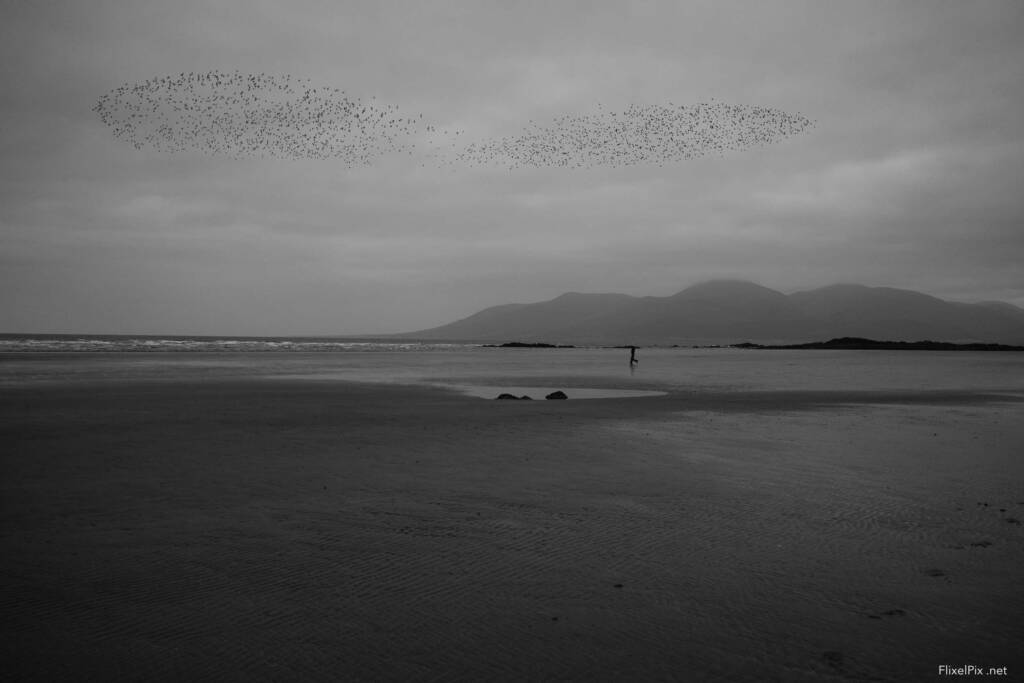
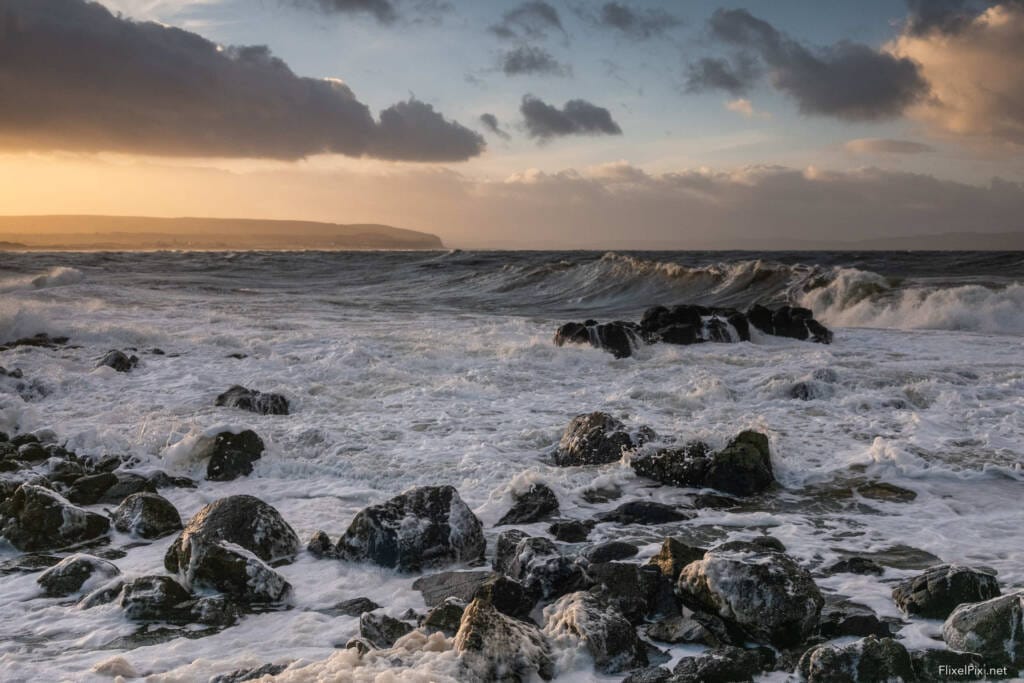
Tyrella Beach, County Down
Tyrella Beach is a beautiful stretch of golden sand on Northern Ireland’s County Down coast. Backed by dunes and open countryside, it offers stunning views of the Mourne Mountains and is a perfect location for photography.

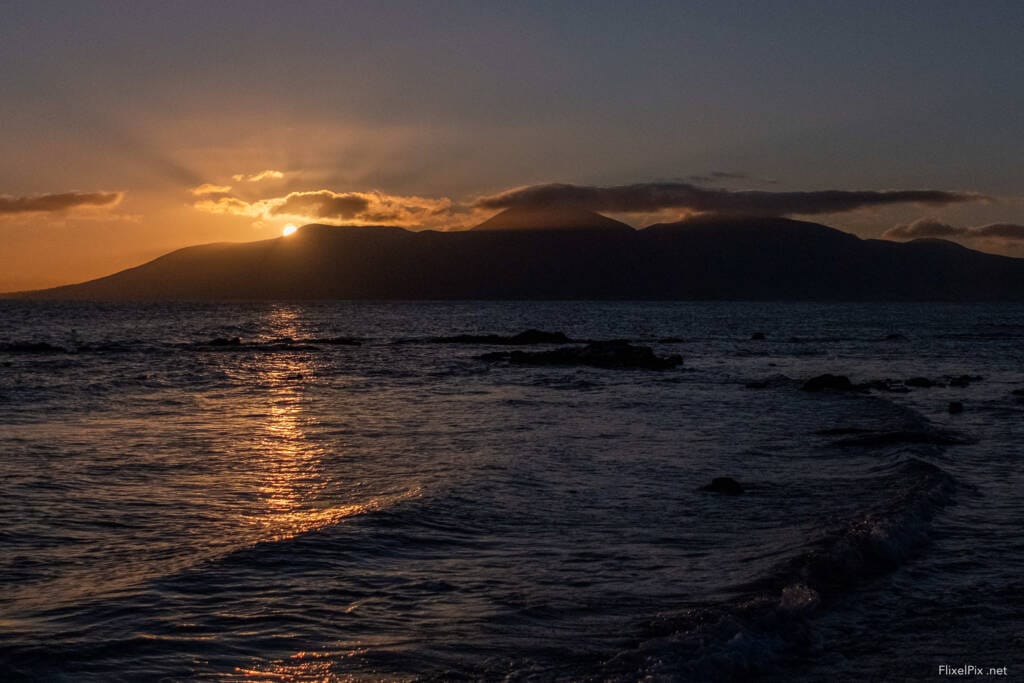

I actually shot my Fujifilm X20 review photos here many years ago, so it felt fitting to return. This time, I captured both sunset and sunrise on the beach. I underexposed by one stop and shot RAW. The X-E5 and 23mm combination performed beautifully, even in low-light conditions.
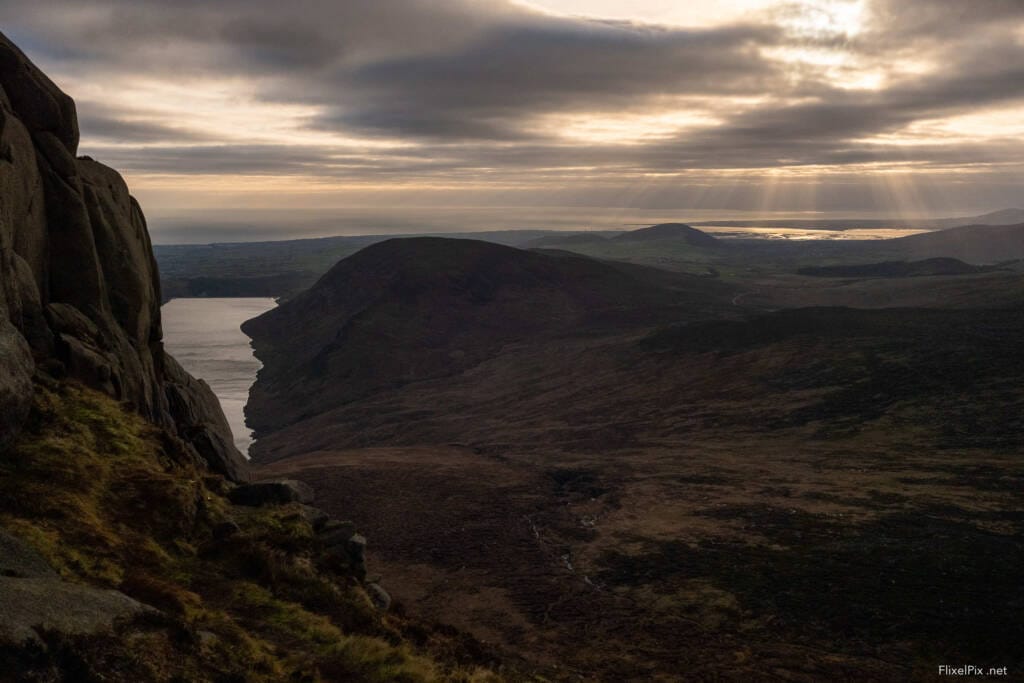
The Mourne Mountains & the Fujifilm 16mm
A trip to the top of Doan Mountain felt like a good opportunity to take advantage of the X-E5’s interchangeable lens system, so I started out with the 16mm. After four or five shots, it felt a little too wide for my style, and the 23mm quickly went back on to the camera.

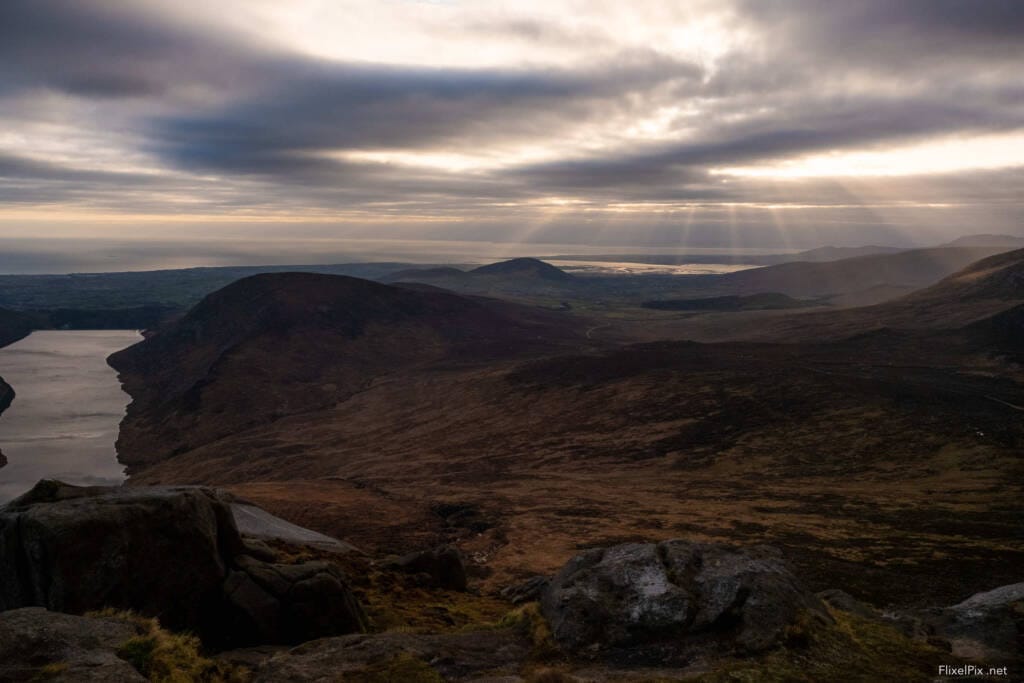
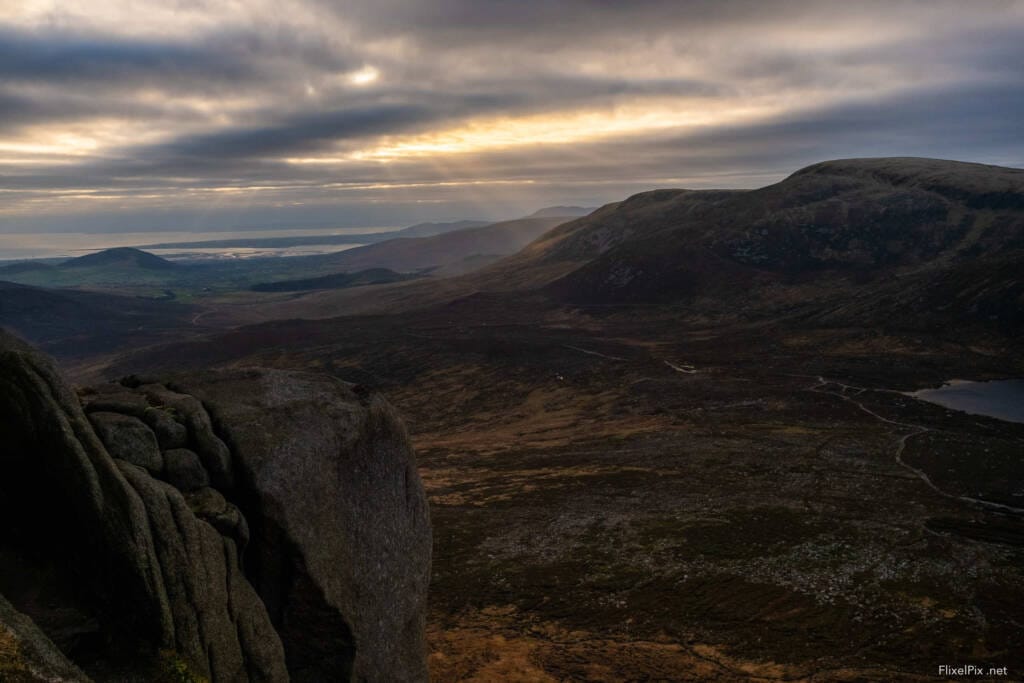
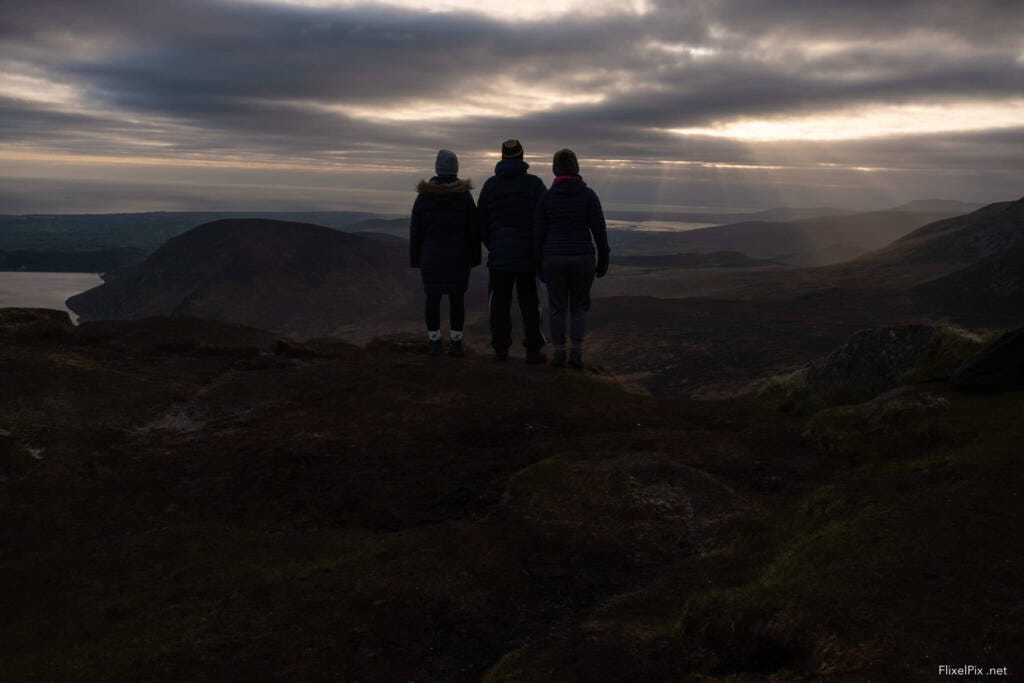
The rope strap that comes with the Fujifilm X-E5 is excellent, a comfortable length for carrying over the shoulder. The tilting screen also works brilliantly in this environment, making it easy to compose images from waist level while looking down at the screen. See Five essential accessories for the Fujifilm X-E5.
North Antrim Coast
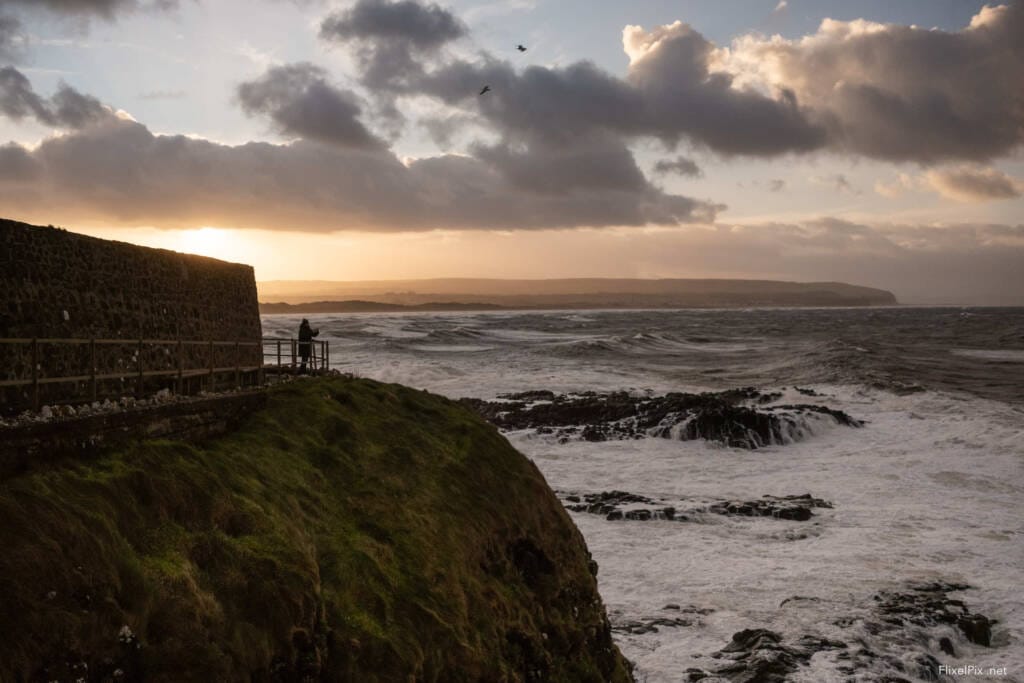
Keeping the 23mm mounted, the X-E5 continued to impress during a visit to Portstewart Strand. Winter light along the coast often brings high contrast, with bright sun and strong sea reflections posing a challenge. The X-E5 meters very well and focuses quickly, it even feels faster than the X100VI, though that may simply be perception.
My only minor criticism is that I seem to knock the autofocus switch from single to continuous quite easily. In real terms, it’s not a major issue.
Film Simulation Dial — RAW vs JPG
The Film Simulation dial is a nice feature, though I expected to use it more. Recently, I’ve returned to shooting primarily in RAW, which allows access to Fujifilm’s film simulations during post-processing. When you import a Fujifilm RAW file into Adobe Lightroom, you can apply any of the film simulations via the Profiles menu. This approach allows more flexibility, letting you experiment with different looks rather than committing to a recipe at the point of capture.
Fujifilm X-E5 Weather Sealing
I’ve never been overly concerned about weather sealing. For years, I took a Fujifilm X100 series camera into the mountains, usually protected by the small Fujifilm leather case (which I wish they still made). That said, knowing that my 16mm and 23mm lenses are weather-sealed while the X-E5 body isn’t has made me slightly more cautious.
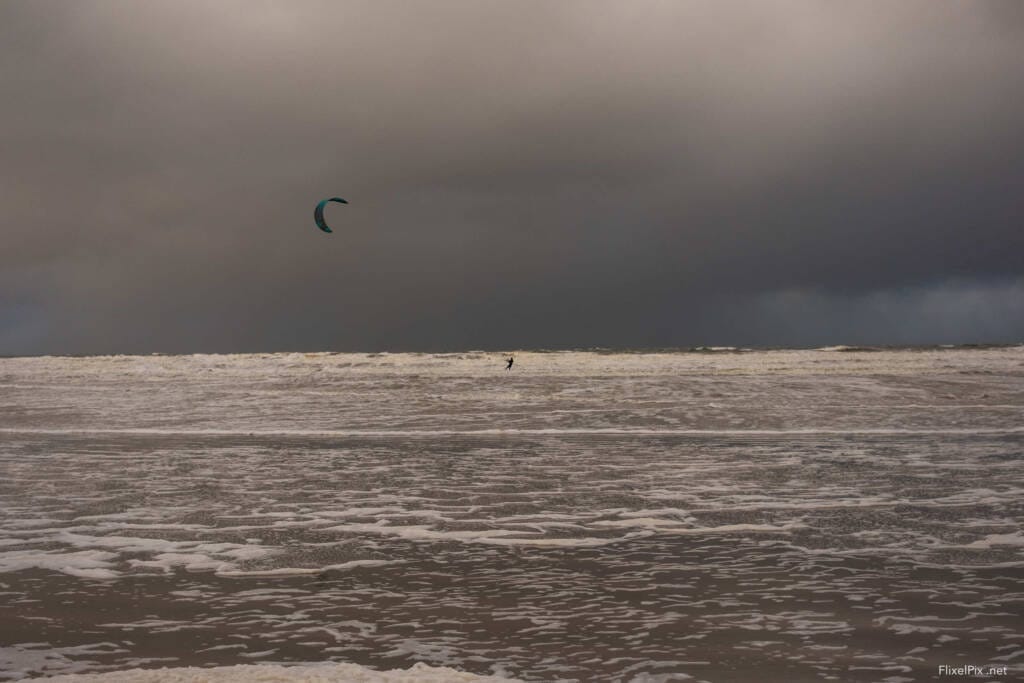
With a bit of care and common sense, however, the lack of weather sealing, while it would have been nice, isn’t a major issue for me.
Fujifilm X-E5 vs Fujifilm X100VI
This is a big question, and one that’s difficult to answer without some contradiction. The X-E5 paired with the 23mm feels very familiar and undeniably X100-like. However, the X100VI does offer some clear advantages.
Firstly, it features a hybrid optical/electronic viewfinder, providing a traditional rangefinder-style experience alongside a high-resolution EVF. The fixed 23mm f/2 lens is slightly faster, the rear screen has a higher resolution, and it also includes a built-in flash and ND filter, both absent from the X-E5.
That said, the FujifilmX-E5’s interchangeable lens system means it can easily serve as a main camera for photographers who need flexibility. I love the 35mm f/2 lens, and I genuinely wonder if I could live with just the X-E5, 23mm, and 35mm as my primary walk-around documentary setup.
| Feature | X100VI | X-E5 + 23mm f/2.8 |
|---|---|---|
| Sensor | 40 MP APS-C X-Trans CMOS 5 | 40.2 MP APS-C X-Trans CMOS 5 HR |
| Lens | Fixed 23 mm f/2 (35 mm equiv) | Interchangeable X-Mount + 23 mm f/2.8 |
| Focal Length (35 mm equiv) | 35 mm | 35 mm with 23 mm lens |
| Max Aperture | ƒ/2 | ƒ/2.8 (kit lens) |
| Optical Features | Built-in ND filter (4 stops) | Weather-resistant lens |
| Image Stabilization | IBIS up to 6 stops | IBIS up to 7 stops (centre) |
| Viewfinder | Hybrid OVF/EVF | EVF only (2.36 m-dot) |
| Screen | 3″ 1.62m-dot tilting touchscreen | 3″ 1.04m-dot tilting touchscreen |
| Continuous Shooting | ~11 fps (mech), 20 fps (ES) | 8 fps (mech), 20 fps (ES) |
| Video | 6.2K/30p, 4K/60p, F-Log2 | 6.2K/30p, 4K/60p |
| Battery Life | ~450 shots (OVF) | ~400 shots |
| Memory Card | UHS-I SD | UHS-II SD |
| Stabilisation Advantage | — | Slight edge at 7 stops (centre) |
| Dimensions (approx.) | 128 × 74.8 × 55.3 mm | 124.9 × 72.9 × 62.1 mm (with lens) |
| Weight | ~521 g (body + card + battery) | ~535 g (with lens) |
| Flash | Built-in + hot shoe | Hot shoe only |
| Film Sim Dial | – | Yes (dedicated dial) |
Conclusion
If you love the look and experience of the Fujifilm X100VI but don’t want to be restricted to a single focal length, the X-E5 may be the ideal solution, a true ‘best of all worlds’ camera. The camera is a joy to use, the menu system is snappy as is the autofocus and metering performances. I suspect the Fujifilm X-E5 will be main camera for 2026. At 40 megapixels, it’s a powerhouse in almost any shooting situation.
Links
5 essential accessories for the Fujifilm X-E5
100 photos captured wit the X100 Series camera
5 essential accessories for the Fujifilm X100VI
How to improve your photography
FlixelPix Instagram
Discover more from FlixelPix
Subscribe to get the latest posts sent to your email.
